For many technical leads and developers, the leap from shipping code to managing a business can feel daunting. However, the rise of sophisticated agentic workflows has changed the landscape for the solo entrepreneur. By building a robust AI automation backbone, you can transition from a developer to a founder who manages a lean, efficient, one-person business while keeping your primary focus on product innovation and engineering.
The Technical Founder’s Advantage: Designing Your System
As a developer, you already possess a superpower: the ability to understand logic flows and systems architecture. When you apply this mindset to business operations, you aren’t just "using tools"—you are designing an automated ecosystem. Instead of treating AI as a suite of disconnected applications, you should view it as an integrated stack.
According to research from Entrepreneur, the key to maintaining a one-person operation lies in identifying the high-friction, repetitive tasks that drain your engineering hours and offloading them to specialized AI agents. Your goal should be to minimize "context switching"—the cognitive load that occurs when you jump between customer support, content creation, and deployment.
Building Your AI Automation Backbone
An effective automation backbone requires a separation of concerns. You need to distinguish between your "Core Product" (the code you write) and your "Business Operations" (the engine that sells, supports, and manages that product).
Establishing the Content and Marketing Engine
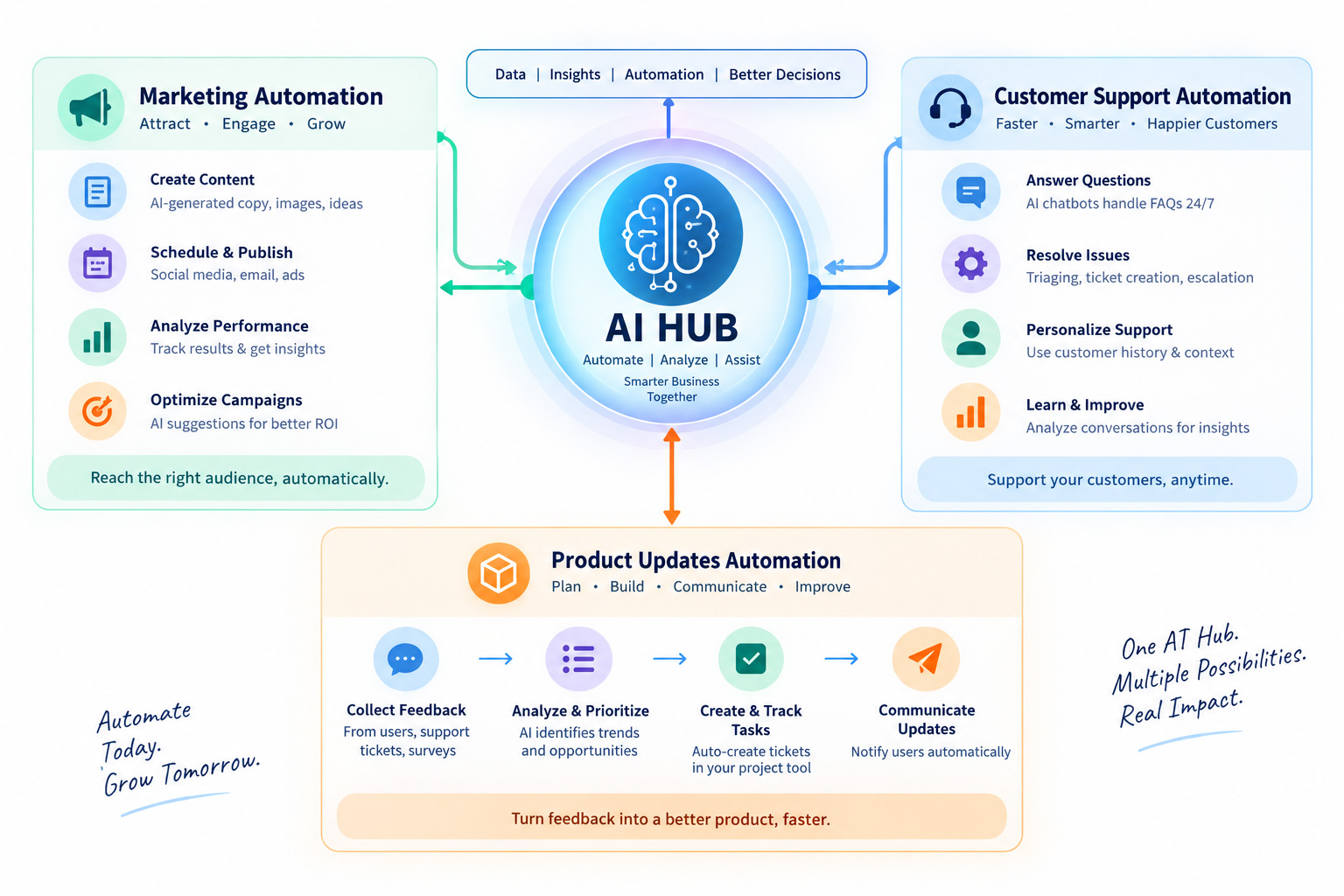
Marketing is often the first casualty when a developer focuses on the product. Use AI to bridge this gap. By setting up automated content pipelines—where an LLM pulls from your commit logs or product documentation to draft release notes, blog posts, or social updates—you maintain a consistent voice without writing every word from scratch.
Automating the Follow-Up and Support Loop
A technical founder must be accessible to users, but you cannot be on call 24/7. Implementing an AI-driven support agent that is trained on your specific technical documentation and FAQs can handle the vast majority of incoming queries. This allows you to step in only when high-level architectural or complex troubleshooting is required.
Optimizing Workflows for Longevity
To run a sustainable one-person business, you must treat your internal tools with the same rigor you apply to your production code. If a process is manual, it is a technical debt waiting to happen.
Versioning Your Automation Logic
Treat your prompt chains and agent configurations like source code. Store them in version control (such as Git), document the expected inputs and outputs, and test your agents regularly. If an automated workflow fails, you should be able to roll it back just as you would a broken build.
Selecting the Right Tool Stack
The "best" stack is the one that minimizes maintenance. Prioritize platforms that offer robust API support and low-code integration capabilities. Whether you choose a platform for lead management or an automated documentation generator, ensure it integrates cleanly with your existing developer environment.
Balancing Product and Founder Roles
The biggest risk for the developer-founder is becoming "the operator" rather than "the architect." If you find yourself spending more time fixing broken automation than writing new code, your system has become a burden.
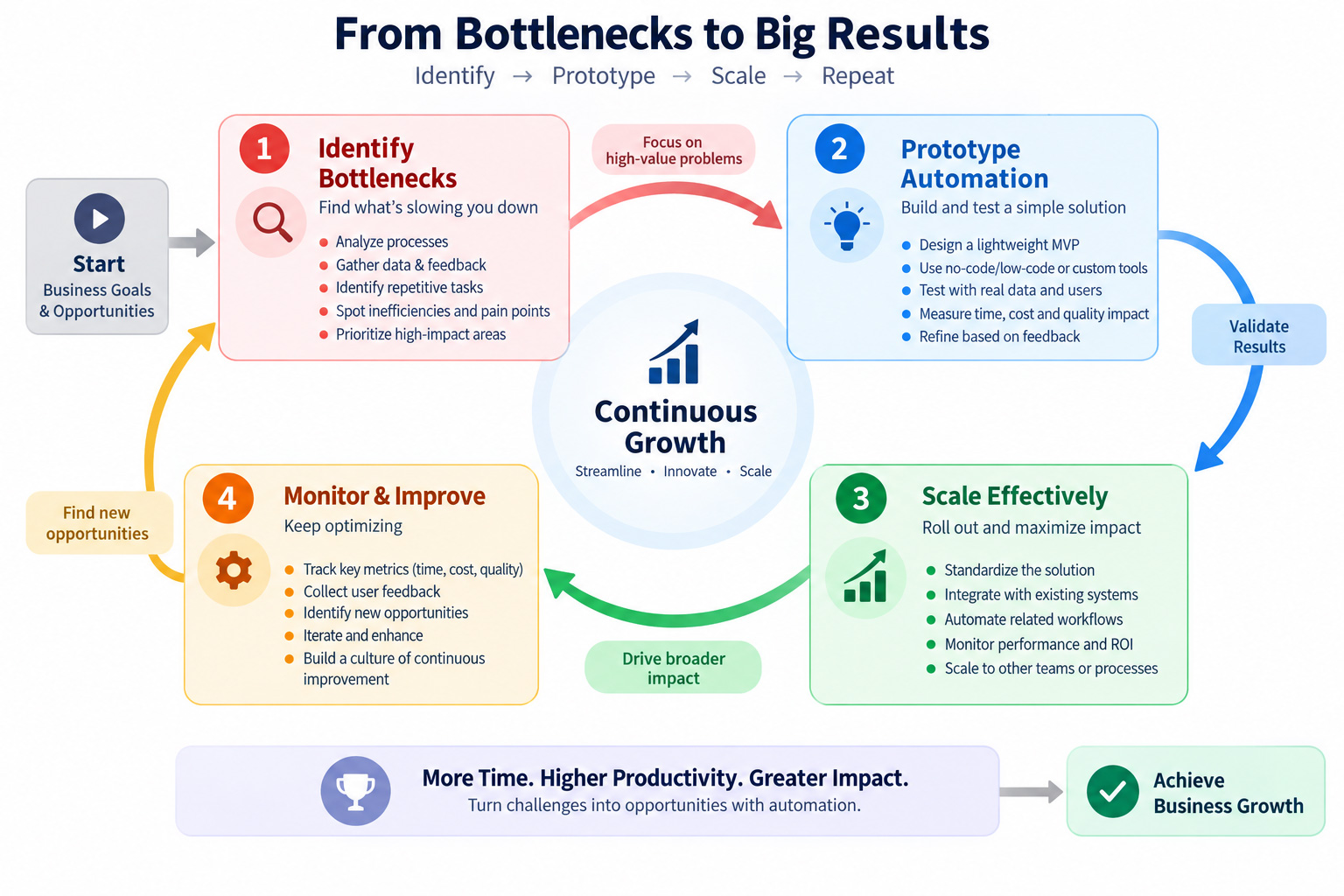
Adopt an iterative approach to your business operations: 1. Identify the biggest time drain. (Is it emails? Scheduling? Content?) 2. Prototype an automated solution. (Keep it simple; don't over-engineer at the start.) 3. Review performance. (Does the AI handle 80% of the task without human intervention?) 4. Refine and scale. (Only once the workflow is stable.)
Conclusion: Engineering Your Future
Transitioning to a one-person business is not about working more hours—it is about designing a machine that runs while you focus on the complex, creative problems that only you can solve. By leveraging AI to manage the operational overhead, you reclaim the autonomy that drew many of us to development in the first place.
Start small, stay technical, and remember that as a developer, you are uniquely qualified to build a business that is not just successful, but structurally sound. Your code is the product, but your automated system is the company. Build them both with care.

%22%2F%3E%0A%20%20%3Crect%20x%3D%220%22%20y%3D%220%22%20width%3D%22768%22%20height%3D%22432%22%20rx%3D%2224%22%20fill%3D%22url(%23glow)%22%20fill-opacity%3D%220.35%22%2F%3E%0A%20%20%3Ccircle%20cx%3D%22638%22%20cy%3D%22102%22%20r%3D%2286%22%20fill%3D%22white%22%20fill-opacity%3D%220.08%22%2F%3E%0A%20%20%3Ccircle%20cx%3D%22104%22%20cy%3D%22346%22%20r%3D%22118%22%20fill%3D%22white%22%20fill-opacity%3D%220.05%22%2F%3E%0A%20%20%3Crect%20x%3D%2256%22%20y%3D%2268%22%20width%3D%22142%22%20height%3D%2234%22%20rx%3D%2217%22%20fill%3D%22white%22%20fill-opacity%3D%220.16%22%2F%3E%0A%20%20%3Ctext%20x%3D%2279%22%20y%3D%2291%22%20fill%3D%22%23FFDF72%22%20font-family%3D%22Avenir%20Next%2C%20Segoe%20UI%2C%20Arial%2C%20sans-serif%22%20font-size%3D%2215%22%20font-weight%3D%22800%22%20letter-spacing%3D%221.4%22%3ESTRATEGY%3C%2Ftext%3E%0A%20%20%3Ccircle%20cx%3D%22112%22%20cy%3D%22166%22%20r%3D%2248%22%20fill%3D%22white%22%20fill-opacity%3D%220.12%22%20stroke%3D%22%23FFDF72%22%20stroke-opacity%3D%220.45%22%20stroke-width%3D%222%22%2F%3E%0A%20%20%3Ctext%20x%3D%2276%22%20y%3D%22178%22%20fill%3D%22%23FFDF72%22%20font-family%3D%22Avenir%20Next%2C%20Segoe%20UI%2C%20Arial%2C%20sans-serif%22%20font-size%3D%2234%22%20font-weight%3D%22800%22%3EST%3C%2Ftext%3E%0A%20%20%3Crect%20x%3D%2256%22%20y%3D%22232%22%20width%3D%22356%22%20height%3D%2218%22%20rx%3D%229%22%20fill%3D%22white%22%20fill-opacity%3D%220.9%22%2F%3E%0A%20%20%3Crect%20x%3D%2256%22%20y%3D%22264%22%20width%3D%22292%22%20height%3D%2218%22%20rx%3D%229%22%20fill%3D%22white%22%20fill-opacity%3D%220.55%22%2F%3E%0A%20%20%3Crect%20x%3D%2256%22%20y%3D%22296%22%20width%3D%22244%22%20height%3D%2218%22%20rx%3D%229%22%20fill%3D%22white%22%20fill-opacity%3D%220.32%22%2F%3E%0A%20%20%3Crect%20x%3D%2256%22%20y%3D%22344%22%20width%3D%22192%22%20height%3D%2242%22%20rx%3D%2221%22%20fill%3D%22white%22%2F%3E%0A%20%20%3Ctext%20x%3D%2282%22%20y%3D%22371%22%20fill%3D%22%2335108C%22%20font-family%3D%22Avenir%20Next%2C%20Segoe%20UI%2C%20Arial%2C%20sans-serif%22%20font-size%3D%2218%22%20font-weight%3D%22800%22%3ERead%20article%20%E2%86%92%3C%2Ftext%3E%0A%20%20%3Cdefs%3E%0A%20%20%20%20%3ClinearGradient%20id%3D%22bg%22%20x1%3D%2238%22%20y1%3D%2224%22%20x2%3D%22718%22%20y2%3D%22412%22%20gradientUnits%3D%22userSpaceOnUse%22%3E%0A%20%20%20%20%20%20%3Cstop%20stop-color%3D%22%2335108C%22%2F%3E%0A%20%20%20%20%20%20%3Cstop%20offset%3D%221%22%20stop-color%3D%22%23622DCF%22%2F%3E%0A%20%20%20%20%3C%2FlinearGradient%3E%0A%20%20%20%20%3CradialGradient%20id%3D%22glow%22%20cx%3D%220%22%20cy%3D%220%22%20r%3D%221%22%20gradientUnits%3D%22userSpaceOnUse%22%20gradientTransform%3D%22translate(672%2076)%20rotate(126.47)%20scale(522.153%20722.085)%22%3E%0A%20%20%20%20%20%20%3Cstop%20stop-color%3D%22%23FFDF72%22%20stop-opacity%3D%220.38%22%2F%3E%0A%20%20%20%20%20%20%3Cstop%20offset%3D%221%22%20stop-color%3D%22white%22%20stop-opacity%3D%220%22%2F%3E%0A%20%20%20%20%3C%2FradialGradient%3E%0A%20%20%3C%2Fdefs%3E%0A%3C%2Fsvg%3E)